

 Request a Quote
Product Details
Key Features:
-
Flexibility: Expansion joints allow for movement in multiple directions (axial, lateral, or angular) to accommodate thermal expansion, contraction, or vibration.
-
Materials: Made from a variety of materials, including rubber, metal (stainless steel, carbon steel), fabric, or PTFE (polytetrafluoroethylene), depending on the application and environmental conditions.
-
Types: There are several types of expansion joints, each suited for specific applications:
-
Metal Expansion Joints: Used in high-temperature or high-pressure systems, such as pipelines or industrial equipment.
-
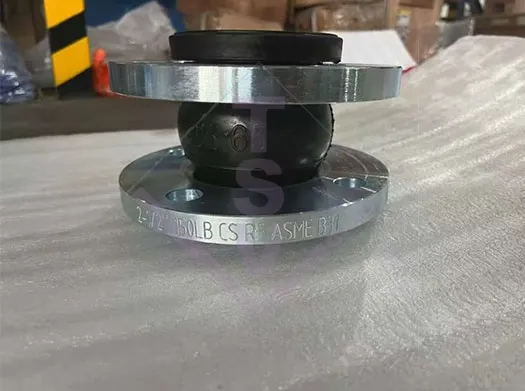
Rubber Expansion Joints: Ideal for absorbing vibration and noise in HVAC systems, water pipelines, or pumps.
-
Fabric Expansion Joints: Used in ducting systems to handle thermal expansion and chemical resistance.
-
Pipe Expansion Joints: Installed in piping systems to absorb thermal movement and reduce stress on pipes.
-
-
Compensation for Movement: Expansion joints can handle axial (lengthwise), lateral (side-to-side), and angular (bending) movements, ensuring the system remains intact under varying conditions.
Applications:
-
Piping Systems: Used in industrial pipelines, HVAC systems, and water treatment plants to absorb thermal expansion and vibration.
-
Bridges and Buildings: Installed to accommodate movement caused by temperature changes, wind, or seismic activity.
-
Industrial Equipment: Used in boilers, turbines, and exhaust systems to handle thermal expansion and reduce stress on components.
-
Transportation: Applied in rail tracks and roadways to allow for expansion and contraction due to temperature changes.
Advantages:
-
Stress Reduction: Prevents damage to pipes, structures, or equipment by absorbing movement and reducing stress.
-
Noise and Vibration Dampening: Rubber or fabric expansion joints can reduce noise and vibration in systems.
-
Leak Prevention: Maintains the integrity of the system by preventing leaks or cracks caused by movement.
-
Versatility: Suitable for a wide range of applications, from small pipelines to large industrial systems.
Limitations:
-
Maintenance: Requires regular inspection and maintenance to ensure proper functioning, especially in harsh environments.
-
Cost: High-quality expansion joints, particularly metal ones, can be expensive.
-
Installation Complexity: Proper installation is critical to ensure effectiveness, which may require specialized expertise.
Working Principle:
-
Expansion joints are installed between two fixed points in a system or structure.
-
When thermal expansion, vibration, or movement occurs, the joint flexes or compresses to absorb the stress, preventing damage to the system.
-
The design of the joint (bellows, rubber sleeve, or fabric) allows it to accommodate movement while maintaining a seal or connection.



