- Email:info@tsv-valve.com


 Jun 04,2026
A pipeline project faces a shutdown. The maintenance team isolates a section and prepares to replace a faulty gate valve. The replacement valve, ordered from a different supplier, has a different face‑to‑face dimension. It will not fit into the existing flanges without custom spool pieces—a week of fabrication and thousands in extra cost. The purchasing manager later discovers that the original valves were API 6D compliant, but the replacement was not. API 6D is the passport for pipeline valves. An API 6D gate valve is built to exacting standards that ensure interchangeability, fire safety, bidirectional sealing, and traceable documentation. If a supplier cannot provide API 6D certification—and the documentation to back it up—your project accepts measurable risks in interchangeability, safety, and audit readiness. This guide explains what API 6D actually covers, the critical requirements it places on gate valves, and how to verify that a manufacturer‘s API 6D claim is real.
API 6D—officially titled “Specification for Pipeline and Piping Valves”—defines requirements for the design, manufacturing, assembly, testing, and documentation of ball, check, gate, and plug valves used in petroleum and natural gas pipeline systems. It is not a general industrial valve standard. It is specifically written for the demanding service conditions of long‑distance transmission pipelines, where valves must withstand soil stress, temperature cycling, and high reliability requirements.
What API 6D includes. It covers face‑to‑face dimensions to ensure interchangeability between manufacturers, material requirements with full traceability, non‑destructive examination (NDE) procedures, pressure testing protocols, marking and identification, and documentation packages including Material Test Reports (MTRs) and test certificates. For gate valves, API 6D applies to both slab gate and expanding gate designs used in pipeline service.
What API 6D does NOT include. API 6D is not the same as API 600. API 600 specifically covers bolted‑bonnet steel gate valves for refinery and process plant applications, typically with wedge‑gate designs. API 6D allows flat gate, slab gate, and double‑gate designs and imposes stricter material traceability and testing requirements suited for pipeline safety. For high‑pressure, high‑temperature refinery applications, API 600 may be the correct standard; for pipeline transmission, API 6D applies. Using the wrong standard route can lead to compliance failures during inspection.
When a gate valve carries the API 6D designation, it must meet several mandatory requirements beyond basic pressure containment. For pipeline gate valves, these five are the most important.
1. Face‑to‑face dimensions – interchangeability without field modification. API 6D prescribes face‑to‑face and end‑to‑end dimensions aligned with ASME B16.10. This means an API 6D gate valve from one manufacturer will fit into the same pipeline flanges as another, provided they share the same size and pressure class. Tolerances are specified: ± 2 mm for sizes up to NPS 10, ± 3 mm for NPS 12 and larger. When a supplier cannot provide API 6D face‑to‑face compliance, you risk ordering a valve that does not physically fit.
2. Fire‑tested design – mandatory safety for flammable service. API 6D requires that valves used in flammable service be fire‑tested. Gate valves fall under API 6FA, the fire test standard for API 6D and 6A valves, which specifies a 30‑minute fire exposure while maintaining pressure containment with acceptable leakage. For quarter‑turn valves (ball and plug), API 607 applies. The fire test confirms that even if the soft seats are destroyed by fire, the metal‑to‑metal secondary sealing remains functional. Without fire‑tested certification, a gate valve in a hydrocarbon pipeline presents an unacceptable safety risk.
3. Double piston effect (DPE) seat design – bidirectional sealing. API 6D gate valves designed with soft seats must include double‑piston‑effect seat construction. DPE seats seal against pressure from both upstream and cavity sides. If the upstream seat leaks, cavity pressure pushes the downstream seat more firmly against the gate, maintaining isolation. This is critical for pipeline block valves where flow direction may reverse or where cavity pressure buildup is a hazard. Valves without DPE seats lack the same level of bidirectional sealing assurance.
4. Anti‑static device – preventing spark ignition. API 6D mandates anti‑static devices for soft‑seated valves—including gate valves with non‑metallic seats. Static electricity can accumulate when the gate moves against the seat, creating a spark that could ignite flammable vapors inside the pipeline. The anti‑static device maintains electrical continuity between the gate, stem, and body, safely discharging any static buildup. Metal‑seated valves are exempt, but for soft‑seated pipeline gate valves, this requirement is mandatory.
5. Testing – rigorous hydrostatic and gas sealing tests. API 6D requires both shell and seat tests. The hydrostatic shell test is performed at 1.5 times the valve‘s pressure rating, with test duration depending on valve size: 2 minutes for NPS 4 and smaller, 5 minutes for NPS 6‑10, 15 minutes for NPS 12‑18, and 30 minutes for NPS 20 and larger. Low‑pressure gas seat tests (typically air or nitrogen at 0.6 MPa) verify sealing performance at low differential pressure. API 6D also requires that documentation include test reports with witnessed results. These tests ensure the valve will seal reliably under both normal and emergency conditions.
-1157.jpg)
A supplier claiming API 6D compliance is not sufficient. You must verify. Three practical steps protect your project from non‑compliant products.
1. Check the API Monogram and license. The API Monogram—a registered mark—can only be applied by manufacturers that have passed on‑site audits verifying both a quality management system meeting API Spec Q1 and product conformance to API 6D. The Monogram must appear on the valve nameplate along with the license number. You can verify the license online through the API Composite List directory. If a manufacturer‘s license has expired or been suspended, the Monogram cannot legally be applied. API Monogram Program licenses are issued only after on‑site audits have verified that the manufacturer has implemented and continually maintained a quality management system that meets the requirements of API Spec Q1 and that the resulting products satisfy the requirements of the applicable API product specification.
2. Request the Material Test Report (MTR). API 6D requires material traceability for all pressure‑containing parts. The MTR must document the material’s chemical composition, mechanical properties, and heat treatment, and tie each component to a specific heat number. For a gate valve, separate MTRs are required for the body, bonnet, stem, gate, and fasteners. If the MTR cannot be matched to the actual valve marking, traceability is broken.
3. Witness the pressure test – for critical orders. For large pipeline projects, the buyer‘s representative should attend the factory pressure test. Witness the hydrostatic shell test, the seat test, and the low‑pressure gas seat test. Review the test record to confirm pressure, duration, and results match API 6D requirements. For non‑critical orders, request the signed test certificate and a video record if in‑person witnessing is not feasible.
.jpg)
Q: Can a valve be API 6D certified but not API 607 fire‑safe? A: Yes. API 607 applies specifically to quarter‑turn valves (ball and plug valves) with soft seats. Gate valves—which are not quarter‑turn—fall under API 6FA for fire testing. A gate valve may be API 6D certified without an API 607 fire‑safe mark; that mark would be incorrect for a gate valve. For gate valves, the fire‑tested status should be verified through API 6FA compliance.
Q: Is API 6D mandatory for all pipeline valves? A: Not by law, but by project specification. Major oil and gas operators, engineering contractors, and pipeline authorities routinely require API 6D for gate, ball, and check valves in transmission service. 49 CFR 192.145 in the US references API 6D as an acceptable standard for pipeline valves. Choosing non‑API 6D valves may violate project specifications, invalidate warranties, or fail owner inspections.
Q: What is the difference between API 6D and ASME B16.34? A: ASME B16.34 defines pressure‑temperature ratings, materials, and dimensions for valve bodies, but it does not address the complete valve assembly. API 6D builds on B16.34, adding requirements for fire safety, anti‑static devices, double piston effect seats, double block and bleed capability, low‑emission packing, and comprehensive documentation. API 6D covers the whole valve; B16.34 covers the pressure boundary. A valve can meet B16.34 without being API 6D compliant.
A pipeline gate valve that fails to meet API 6D requirements can create three categories of project risk.
Interchangeability risk. Without API 6D face‑to‑face dimensions, replacement valves may not fit, requiring expensive spool pieces or field modifications.
Safety risk. Without fire‑tested design, anti‑static devices, and DPE seats, the valve may not contain a fire or may allow static spark ignition.
Audit risk. For projects requiring API 6D certification, a non‑compliant valve fails owner inspection, delays commissioning, and can require complete replacement. When the serial number, compliance placard, API Monogram information, MTR, test report, and certificate package do not tell the same story, the compliance claim is unsupported.
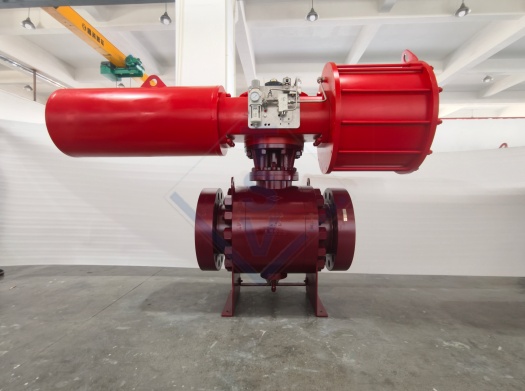
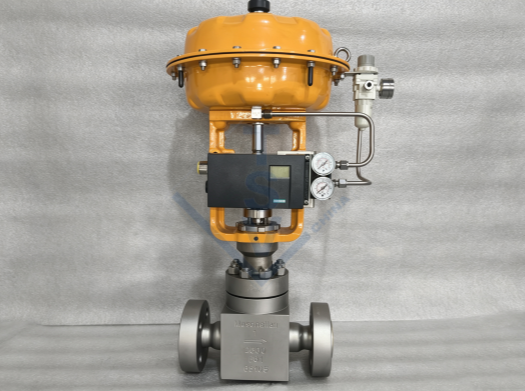
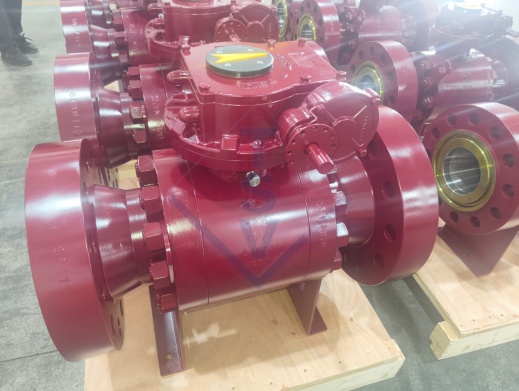
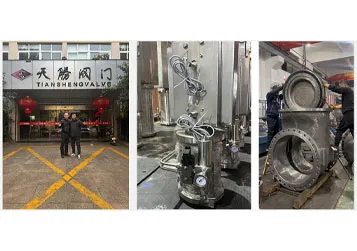
TSV manufactures API 6D gate valves, check valves, and ball valves for pipeline applications. TSV‘s production facilities include 10 CNC machining centers for high‑precision components and 10 CNC lathes for high‑volume parts manufacturing. TSV provides full API 6D documentation packages, including MTRs, test certificates, and serial number traceability. For fire‑tested valves, TSV can provide API 6FA certification records. Each valve can be customized with electric, pneumatic, or hydraulic actuation to meet specific project requirements. TSV‘s quality control process follows the API 6D framework and includes rigorous in‑process and final inspections.
→ Request a quote from TSV for API 6D gate valves — Share your project pipeline class, required valve size and pressure rating, and actuation type (manual, electric, pneumatic, hydraulic). TSV‘s technical team will provide API 6D datasheets, MTR samples, and a compliance document package for your review.
Related News



E-mail: info@tsv-valve.com

Telephone: +86-13695850057

Whatsapp: +86-13695850057

Address: TianSheng Industrial Park,Dong'ou Industrial Zone,Oubei Town,Wenzhou City,Zhejiang Province,China