- Email:info@tsv-valve.com


 Apr 14,2026
You’ve seen them in water mains, industrial pipelines, and power plants – a wheel that turns and a stem that either rises as you open it or stays hidden inside. That’s a gate valve. Unlike a ball valve that rotates 90°, a gate valve lifts a wedge‑shaped disc out of the fluid path. The result is a straight‑through channel with almost no flow restriction. This guide explains the two main types – rising stem vs. non‑rising stem – their advantages, and why one manufacturer’s manufacturing capabilities (CNC machining centers, strict quality control, and 60,000 tons annual capacity) make them a reliable source.
A gate valve, also known as a sluice valve, opens by lifting a round or rectangular gate or wedge out of the path of the fluid. When fully open, the wedge is completely removed from the flow stream.
The valve has a wheel or actuator that turns a threaded stem. The stem is connected to a wedge. As the stem turns, the wedge lifts up into the bonnet. When fully open, the wedge is completely out of the way, leaving a clear, straight‑through passage. The sealing surfaces are parallel or wedge‑shaped; when closed, line pressure pushes the wedge against the seat for a tight seal.
Unlike globe valves that force the fluid to change direction, this design keeps the flow straight. That means low fluid resistance and minimal pressure drop. The sealing surface is also less exposed to scouring and erosion. For applications where pressure drop matters – long pipelines, pumping stations, or gravity flow lines – this type is often the best choice.
These valves are characterised as having either a rising or a non‑rising stem. The choice depends on space and visibility needs.
When you turn the wheel, the stem rises out of the bonnet. You can see at a glance whether the valve is open (stem up) or closed (stem down). This is a simple, reliable position indicator that requires no sensors or electronics. Rising stem valves are common in above‑ground installations where vertical space is available. In chemical plants or water treatment facilities, operators can walk by and instantly know the valve status. The rising stem also allows for easy attachment of limit switches or position transmitters.
In a non‑rising stem design, the stem threads are inside the valve body. When you turn the wheel, the stem rotates but does not move up. The wedge moves up inside, but the stem stays at the same height. This design is used where vertical space is limited – underground vaults, under floors, or inside machinery. The trade‑off is that you cannot see the valve position from outside. Some non‑rising stem valves have a position indicator on the top of the stem or use a limit switch.
Rising stem – when you need visual confirmation and have vertical clearance
Non‑rising stem – when space is tight or the valve is buried
A gate valve with the right stem type for your installation will be easier to operate and maintain.
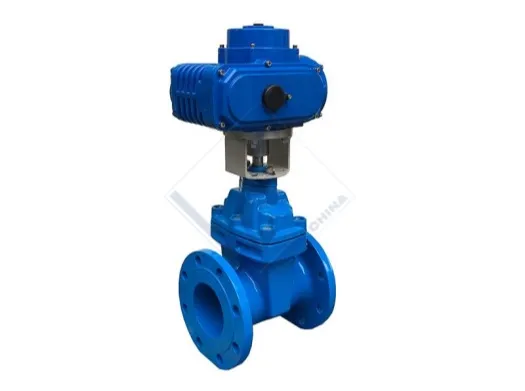
These valves offer specific benefits that make them the preferred choice for many industrial applications.
Because the flow path is straight through and the gate lifts completely out of the way, fluid resistance is very low. The sealing surface is also less exposed to scouring and erosion compared to globe valves. This means longer service life in abrasive services such as slurry lines or sand handling.
The gate moves perpendicular to the flow. Once the wedge is off the seat, there is no flow force pushing against it. This makes operation easier, especially for larger valves. For manual operation, this reduces operator fatigue. For actuated valves, it allows smaller, less expensive actuators.
These valves are bidirectional. You can install them in any orientation without worrying about flow direction. They do not disturb the flow or reduce pressure significantly. This simplifies piping design and reduces installation errors.
Compared to globe valves of the same size, gate valves are shorter (less distance between flanges). This saves space in pipe runs. The manufacturing process is well‑established, and these valves are suitable for a wide range of applications – from water and oil to gas and steam.
Beyond the advantages, there are a few characteristics to keep in mind.
The medium channel inside the valve body is straight through. The fluid enters and exits in a straight line, with no turns or obstructions. This contributes to the low flow resistance and makes this design ideal for applications where pressure drop must be minimized, such as long-distance pipelines or suction lines.
Because the gate must travel the full height of the bore, these valves have a longer stroke than quarter‑turn valves. Opening or closing a large gate valve can take many turns of the wheel – sometimes 20-30 turns for a 12-inch valve. For actuated valves, this means slower operation compared to ball or butterfly valves. For applications that cycle frequently, a quarter‑turn valve might be better.
As mentioned, the short face‑to‑face dimension saves space. The simple shape also means lower manufacturing costs compared to more complex valve types like globe or control valves. This makes gate valves an economical choice for large diameters.
Selecting the right material and pressure class is critical for long service life.
Cast iron – for water, air, and non‑corrosive fluids up to 200°F, Class 125/250
Cast steel (WCB) – for steam, oil, gas up to 800°F, Class 150‑600
Forged steel (A105) – for high‑pressure, small‑bore applications, Class 800‑1500
Stainless steel (CF8/CF8M) – for corrosive fluids, food, pharmaceutical, Class 150‑300
Duplex stainless – for seawater and chloride‑rich environments
Metal‑to‑metal – for high temperature and abrasive services (stellite or 13Cr)
Soft seat (PTFE, NBR, EPDM) – for bubble‑tight shut‑off at lower temperatures
Resilient wedge (fully rubber‑lined) – for water and wastewater, excellent sealing
TSV produces these valves using a range of modern equipment. The table below summarizes their main production facilities and capacities.
| Equipment | Quantity | Key capability |
|---|---|---|
| Ordinary lathe | 5 | Basic turning of inner holes, outer circles |
| CNC machining centers | 10 | High precision, high speed, complex parts |
| Drilling machines | 4 | Holes, grooves, threads in valve components |
| Drilling and milling machines | 4 | Integrated drilling and milling for convex/concave surfaces |
| CNC lathes | 10 | Inner/outer circular surfaces, conical surfaces, threads |
TSV’s products now have over 100 series and 2000 specifications. Annual production capacity has increased from 150 tons to 60,000 tons. This scale allows them to handle both standard and custom orders efficiently. The company plans to purchase advanced production equipment such as CNC lathes, establish fully intelligent high and low temperature butterfly valve production lines, and upgrade laboratory testing equipment and high‑precision measuring instruments.
TSV strictly adheres to established global standards. Each valve undergoes rigorous inspections at multiple stages of production by a dedicated quality control team. The company also provides product qualification certificates, labels, quality assurance certificates, and installation instructions with every shipment.
TSV provides a full range of after‑sales services.
Product qualification certificates
Labels and quality assurance certificates
Installation instructions
Delivery lists
12‑month product warranty period
Lifelong free consulting services
Professional technical personnel provide telephone guidance for installation. Data is preserved and filed for every interaction, and customer information is kept strictly confidential.
TSV’s product range goes from medium to high performance. Raw materials and design can be adapted to meet specific customer requirements. Most products can be tailor‑made to reach specific constraints.
Actuating (pneumatic, electric, hydraulic)
Installation
Maintenance
From a full range of standard and custom valves, TSV’s comprehensive range delivers unmatched performance, reliability, and efficiency, fulfilling specific industry demands.
Instead of a standard FAQ, here are answers to questions engineers frequently ask.
Q: Can a gate valve be used for throttling?
No. Running a gate valve partially open causes the wedge to vibrate against the seat, leading to rapid wear and noise. Use a globe valve or control valve for throttling.
Q: What is the difference between a solid wedge and a flexible wedge?
Solid wedge is simpler and cheaper, suitable for clean fluids and moderate temperatures. Flexible wedge has a cutout that allows it to conform to seat misalignment, better for thermal cycling or dirty services.
Q: How do I know if I need a rising or non‑rising stem?
If you have vertical space above the valve and want visual position indication, choose rising stem. If the valve is underground or in a pit with limited headroom, choose non‑rising stem.
Q: What is the typical lifespan of a gate valve?
In clean water service, a well‑maintained gate valve can last 30-50 years. In abrasive or corrosive services, lifespan may be 5-10 years depending on material selection.
Q: Does TSV offer electric or pneumatic actuation?
Yes. TSV can supply gate valves with electric, pneumatic, or hydraulic actuators, with positioners and limit switches as required.
Gate valves are not the only choice for isolation. Here’s how they compare to other types without judgment.
Compared to ball valves
Ball valves offer quarter‑turn operation and very low torque, but they have higher cost at large diameters. Gate valves are more economical for sizes above 8 inches and provide straight‑through flow with even lower pressure drop.
Compared to butterfly valves
Butterfly valves are lighter and cheaper, especially at large diameters. However, they have a higher pressure drop and the disc remains in the flow path even when fully open. Gate valves provide a full bore with no obstruction, making them preferable for pigging or low‑pressure drop applications.
Compared to globe valves
Globe valves are designed for throttling, not isolation. They have a much higher pressure drop. Use a gate valve when you need tight shut‑off and minimal flow resistance.
TSV offers forged steel gate valves, casting gate valves, knife gate valves, and self‑sealing gate valves. With over 100 series and 2000 specifications, they can meet most application requirements. The combination of modern CNC equipment, strict quality control, and a 60,000‑ton annual capacity makes them a reliable partner for both standard and custom orders.
A gate valve from a manufacturer with TSV’s production scale and quality systems will perform reliably for years.
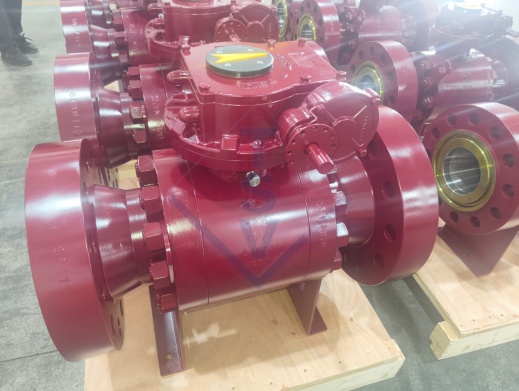
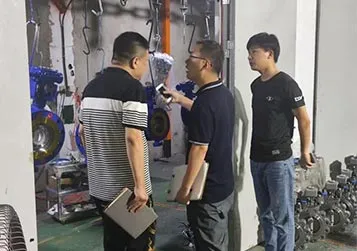
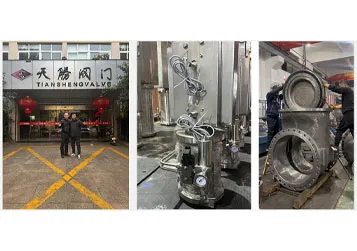
[Image: TSV factory floor with gate valves in assembly and testing]
TSV can provide product qualification certificates, test reports, and installation instructions. Their team can also help you select the right valve type – rising stem or non‑rising stem – based on your space constraints and flow requirements. For custom actuation or special materials, contact their engineering team.
[Contact TSV for a gate valve quote]
Related News


E-mail: info@tsv-valve.com

Telephone: +86-13695850057

Whatsapp: +86-13695850057

Address: TianSheng Industrial Park,Dong'ou Industrial Zone,Oubei Town,Wenzhou City,Zhejiang Province,China