- Email:info@tsv-valve.com


 Apr 14,2026
Ever wonder why some valves last for decades while others start leaking after a year of throttling service? The answer often lies in how the sealing surfaces move. In a gate valve, the wedge slides against the seat every time you operate it. In a ball valve, the ball rotates against the seats. But in a globe valve, the disk lifts straight up – no sliding, no scraping. That’s why globe valves are the go‑to choice for applications that need frequent operation and tight shut‑off. This guide explains how the design works, where it shines, what to watch out for, and how to choose a reliable manufacturer.
Unlike valves that rotate or slide, the globe valve’s disk moves perpendicular to the seat.
When you open or close the valve, the disk lifts away from the seat in a straight line. There’s no rotational or lateral friction against the sealing surfaces. This means the soft seat (if PTFE) or the metal sealing faces don’t wear down from repeated cycling. The result is a seal that remains tight after thousands of operations. In fact, a well‑maintained globe valve can outlast a gate valve in throttling service by several times. For example, in a power plant’s feedwater control loop, a globe valve may cycle 50‑100 times per day for 20 years with minimal seat wear, whereas a gate valve used in the same service would need replacement after two years.
Because the disk only needs to move a few millimeters from fully closed to fully open, the valve responds quickly. For actuated valves, this means shorter cycle times – critical for control loops that need to react to process changes. For manual valves, fewer turns of the handwheel (typically 5‑10 turns for a 2″ valve vs. 15‑20 for a gate valve) reduce operator fatigue. In an emergency shut‑down situation, those saved seconds can prevent equipment damage.
A globe valve with this design is ideal for control loops that cycle frequently.
Not every valve is suited for throttling. Here’s where a globe valve is the clear winner, with real‑world examples from various industries.
A heat exchanger needs a constant outlet temperature. The control valve adjusts flow based on a sensor. A gate valve would wear out quickly because it’s not designed for partial opening. A ball valve could work but the partial opening erodes the ball and seats. A globe valve handles the duty without issue. Many power plants and refineries use globe valves for this exact purpose. In a typical chemical plant, cooling water bypass valves may operate continuously, adjusting flow every few minutes. Globe valves with stainless steel trim are standard here.
High pressure (up to 4500 psi), high temperature (up to 1000°F), and frequent adjustments. Globe valves are standard in power plants for feedwater control. The metal‑seated design withstands erosion from high‑velocity water. The short stroke allows fast response to drum level changes. A typical 500 MW coal‑fired plant may have a dozen globe valves in the feedwater system alone.
Small flow rates, precise metering, often with corrosive chemicals. A globe valve with PTFE seat and stainless steel body gives bubble‑tight shut‑off and fine adjustment. Typical applications include injecting scale inhibitors, corrosion inhibitors, or pH control chemicals. In oil and gas production, globe valves are used to inject methanol or corrosion inhibitors into wellheads.
Globe valves are common on steam lines for drip legs, bypasses, and blowdown because they close tightly against pressure. The sealing action (pressure under the disk) actually improves with higher upstream pressure. In a steam distribution system, globe valves are also used for pressure reducing stations where precise control is needed.
The same pocket that helps with sealing can also trap debris.
The cavity around the disk and seat can collect particles. If your fluid contains sand, scale, weld slag, or other solids, a globe valve may stick or fail to close. In such cases, a gate valve (with a through‑conduit design) or a Y‑pattern globe valve (with a straighter flow path) is better. For heavy slurries, consider a knife gate valve. For wastewater treatment, for example, globe valves are rarely used because of solids.
Because the fluid changes direction inside the body (entering below the disk, turning upward around the disk, then turning again to exit), globe valves have a higher pressure drop than gate valves – typically 3‑5 psi vs. 0.5‑1 psi for a gate valve at the same flow rate. That’s acceptable in systems with ample pump head, but not in low‑pressure gravity flow lines or suction piping. For a 100‑foot vertical water column, a 5 psi drop is significant and may require pump resizing.
A globe valve is not a universal solution – but for clean fluids and frequent operation, it’s hard to beat.
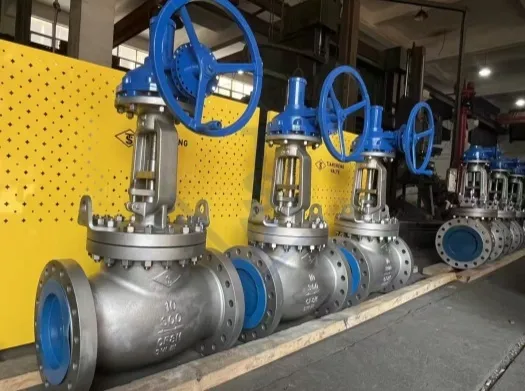
Installing a globe valve backwards is a common mistake that leads to premature leakage.
Most globe valves are designed with the flow entering from below the disk. This way, line pressure helps push the disk against the seat when closed. If you install it backward, the pressure tries to lift the disk off the seat, causing leakage and possible seat damage. The stem packing may also be over‑pressurized, leading to leaks to atmosphere. In high‑pressure steam service, a backward‑installed globe valve can be dangerous because the disk may lift suddenly, causing water hammer.
Look for an arrow cast into the body. If there’s no arrow, the standard rule is “flow in through the bottom, out through the top.” For Y‑pattern globe valves, the flow direction is usually straight through, but always check the manual. Some globe valves have the flow direction reversed for specific applications (e.g., high‑pressure drop services) – always refer to the manufacturer’s data sheet.
Globe valves are available in a range of materials to match your service conditions. Choosing the wrong material leads to corrosion or mechanical failure.
Cast iron – for low‑pressure water, air, and non‑corrosive fluids up to 200°F (Class 125/250)
Cast steel (WCB) – for steam, oil, gas up to 800°F, Class 150‑600
Forged steel (A105) – for high‑pressure, small‑bore applications, Class 800‑1500
Stainless steel (CF8/CF8M) – for corrosive fluids, food, pharmaceutical, Class 150‑300
PTFE (Teflon) – low friction, bubble‑tight shut‑off, temperature limit ~400°F. Excellent for chemicals and clean services.
Metal (stellite or 13Cr) – high temperature, high pressure, but may have some leakage (typically Class IV or V). Used in steam and high‑temperature oil.
Nylon or PEEK – for abrasive or high‑cycle applications. More wear‑resistant than PTFE but less chemical resistance.
Soft trim (PTFE): best for tight shut‑off, low torque.
Hard trim (stellite): for erosion resistance in high‑velocity or dirty services.
Regulating trim: specially profiled disk for better flow control at low openings.
When sourcing globe valves, look for a manufacturer with modern CNC equipment and in‑house testing. The table below shows key equipment and its purpose.
| Equipment | Purpose |
|---|---|
| CNC lathes | Precision turning of bodies, bonnets, and disks |
| Machining centers | Complex milling of flanges and mounting pads |
| Drilling machines | Hole and thread cutting for bolted connections |
| Hydrostatic test stand | Pressure testing of each valve at 1.5× rated pressure |
| Spectrometer | Material verification to ensure correct alloy |
A manufacturer with high annual capacity (e.g., 60,000 tons) and strict quality control will deliver consistent products with material traceability. In addition, look for ISO 9001 certification and third‑party test reports.
Instead of a generic FAQ, here are real questions that engineers ask when specifying globe valves.
Why does my globe valve leak when fully closed?
Possible causes: debris on the seat, worn disk, or incorrect flow direction. First, try cycling the valve open and closed a few times to flush debris. If that doesn’t work, disassemble and inspect the seat and disk. Also verify that the flow arrow matches installation.
Can I use a globe valve for on‑off service only?
Yes, but it’s over‑engineered for that. A gate valve is cheaper and has lower pressure drop for on‑off. However, if you already have globe valves in stock, they work fine for isolation.
What’s the difference between a globe valve and a control valve?
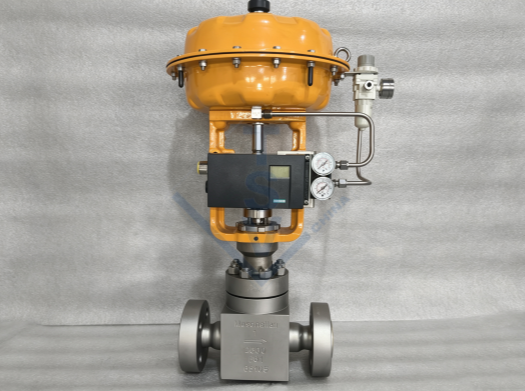
A control valve is a globe valve with an actuator and positioner. The body is the same, but the trim may be specially designed for linear flow characteristics. Many globe valves can be fitted with pneumatic or electric actuators to become control valves.
How often should I replace the seat?
For clean services, a PTFE seat can last 10+ years. For steam service with metal seats, inspect every 2‑3 years. Replace when leakage exceeds acceptable limits (e.g., 1% of flow).
Can I repair a globe valve without removing it from the line?
Some designs allow top‑entry repair – you can remove the bonnet and disk without unbolting the body from the pipeline. This saves significant downtime. Check with the manufacturer before ordering.
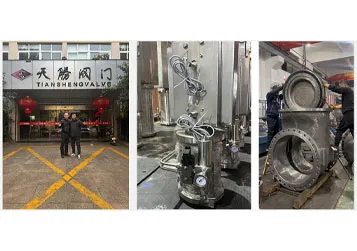
TSV (Zhejiang TSV Valve Co., Ltd.) produces forged steel, flanged, and cast steel globe valves – over 100 series and 2000 specifications. Their facility runs 10 CNC lathes, 10 machining centers, and multiple drilling/milling units. Annual capacity reaches 60,000 tons. Each valve is hydrostatically tested, and every shipment includes material certificates and installation instructions.
TSV offers a 12‑month warranty and lifetime free consulting. Their engineering team can help you select the right globe valve based on your pressure, temperature, and media. They also provide actuation (pneumatic, electric) and installation support. For critical applications, they can supply NACE MR0175 compliant valves for sour service.
A globe valve from a manufacturer with TSV’s production scale and quality systems will serve you for years.
Verify flow direction arrow before bolting into the line. A backward installation will cause leakage and may damage the seat.
Use proper gaskets (spiral wound for high temp, rubber for low pressure). Match gasket material to the fluid.
For flanged valves, tighten bolts in a star pattern to avoid distorting the body. Use a torque wrench.
Install with the stem vertical for most designs; some angle valves allow horizontal stem. Avoid installing with the stem pointing down, as debris can accumulate in the bonnet.
After the first year of service, inspect the disk and seat for wear. Take baseline measurements.
If leakage occurs when closed, the seat or disk may need replacement. Order replacement trim kits from the manufacturer.
Lubricate stem threads annually with anti‑seize for high‑temperature service. For low‑temperature, use a light oil.
For actuated valves, check actuator linkage alignment and cycle time annually. Recalibrate positioner as needed.
Store globe valves indoors, off the ground, with flange covers in place.
For long‑term storage, apply a light oil to the stem and keep the valve in the closed position to protect the seat.
When ordering globe valves, have the following information ready:
Size (e.g., 2″, 4″, 6″)
Pressure class (e.g., Class 150, 300, 600)
Material (body, bonnet, disk, seat)
End connections (flanged, threaded, butt weld)
Flow direction (standard or reverse?)
Actuation (manual handwheel, pneumatic, electric)
Certifications required (ISO, NACE, CE, API)
Quantity and delivery timeline
Providing this information upfront will speed up quoting and reduce errors.
Provide your operating pressure, temperature, fluid type, and end connection requirements. TSV can recommend the correct material, pressure class, and seat type – and supply test reports upon request.
Related News




E-mail: info@tsv-valve.com

Telephone: +86-13695850057

Whatsapp: +86-13695850057

Address: TianSheng Industrial Park,Dong'ou Industrial Zone,Oubei Town,Wenzhou City,Zhejiang Province,China