- Email:info@tsv-valve.com


 Apr 23,2026
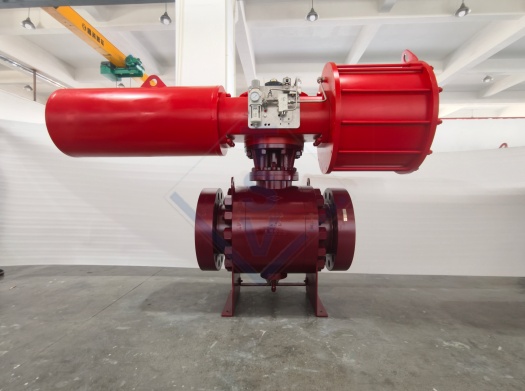
When engineers search “Forged or Cast Ball Valve for Your Pipeline?”, most actually want one honest answer: Which one leaks less, lasts longer, and won’t blow my maintenance budget?
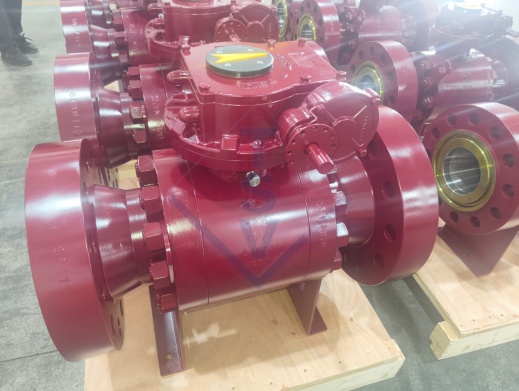
The short version: forged handles high-pressure, high-temperature chaos better—think 6000 psi and above. Cast works for lower pressure, large diameters, and cost-sensitive projects. But here’s what nobody tells you: both have hidden failure points that most sales reps skip.
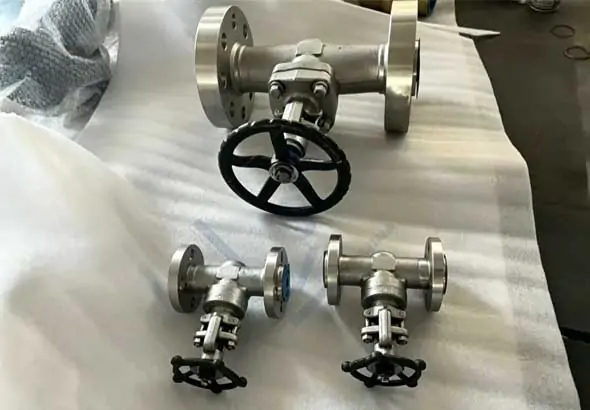
Let’s walk through a real Tuesday morning at a chemical plant. You’ve got a 10-inch pipeline carrying slightly abrasive medium. Last month, a cast valve’s body showed micro-cracks near the weld line. Not catastrophic—yet. But the repair meant shutting down a whole section. Lost production? Three days. Cost? Near five figures.
So when someone pushes cast as “cheaper,” ask: cheaper upfront or cheaper over five years?
Most articles compare tensile strength and porosity. Useful, but incomplete. The real decision lives in three overlooked factors:
Thermal cycling tolerance – Forged valves handle sudden temperature swings (e.g., steam to cold water) without developing stress fractures. Cast? Not so much.
Repair frequency in dirty media – Cast bodies tend to trap particles in internal voids, accelerating seat wear. Forged’s denser grain structure resists this.
Lead time for custom configurations – Many suppliers stock only standard cast valves. Need a special end connection? Suddenly “cheap” becomes expensive waiting.
A 2023 industry report (Valve World Academy) noted that forged steel valves show 31% lower leak rates in high-cycle applications compared to cast equivalents of the same pressure class. That’s not marketing—that’s metallurgy.
Imagine a pipeline running through a remote desert site. Ambient heat, dust storms, and infrequent maintenance. You install a cast ball valve. Six months later, the body cracks from uneven thermal expansion. Now you’re airlifting a replacement.
Forged would have survived. But here’s the twist: neither forged nor cast ball valves may be your best move if your system requires frequent throttling or zero fugitive emissions.
That’s where a different design steps in—something many engineers forget to evaluate.
Ball valves excel at on/off service. But if your application involves partial opening, pressure fluctuations, or slurry media, you’re forcing a square peg into a round hole. The result? Premature seat damage, stem leaks, and unpredictable shutdowns.
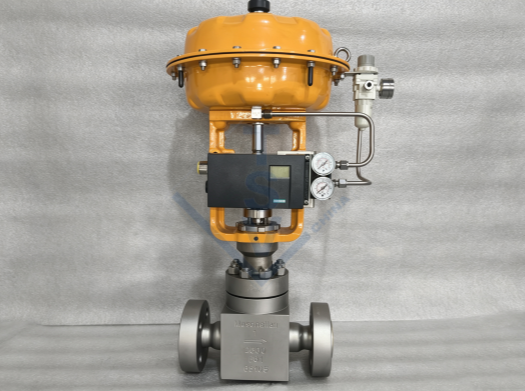
For these tougher cases, experienced operators switch to globe-style control valves in critical zones. They offer better throttling precision and easier maintenance.
You can explore robust flow control solutions here that many plants use to replace failing ball valves in modulating service.
Last year, a food processing plant struggled with cast ball valves that kept galling after weekly cleaning cycles. High-pressure hot water + mild caustic = disaster for soft seats. They switched to a forged design in one line—better, but still required quarterly stem packing adjustments.
Then they tested a TSV globe valve on the most aggressive line. After nine months: zero packing leaks, smoother throttling, and no unplanned downtime. The maintenance lead told me, “I don’t care what the body is if I can’t stop it from weeping.”
That’s the real-world truth: material matters, but design maturity matters more.
Here’s a simple decision matrix based on actual field data:
Choose forged ball valve if: pressure > 1500 psi, temp > 400°F, cycle count > 5000/year, or pipeline transports dangerous media.
Choose cast ball valve if: large diameter (>12”), low pressure (<600 psi), non-critical media, and initial budget is the only constraint.
Consider a globe or specialized valve if: you need throttling, dirty media, steam conditioning, or low fugitive emission requirements.
Don’t forget to ask your supplier: What’s your return rate on cast bodies over 8 inches? The answer might surprise you.
Before you finalize any order, verify these three often-ignored specs:
Seat material compatibility – PTFE is fine for clean media. For high temp, try PEEK or metal-seated designs.
Stem anti-blowout design – Many cheap cast valves skip this. Forged usually includes it.
Inspection documentation – Request ultrasonic testing reports for cast bodies. You’ll see porosity levels they don’t advertise.
A reliable manufacturer will share detailed inspection protocols and material certs without a fight.

Here’s what vendors won’t put in a brochure: forged valves are heavier. That means stronger supports. Cast is lighter but more brittle during installation—one dropped valve, and you’ve got invisible cracks.
Also, repair parts: forged bodies rarely need replacement. Cast bodies sometimes crack near flange welds after 5-7 years. Factor that into your lifecycle cost.
One chemical plant manager told me: “I’d rather pay 30% more upfront for forged than explain to my boss why we have to shut down for a cast valve replacement in August.”
Standard valves fit standard pipelines. Yours probably isn’t standard. Special end prep, extended bonnet for cryogenic service, or actuator mounting patterns—these kill off-the-shelf solutions.
That’s where a supplier offering customized flow control assemblies becomes your best partner. They don’t just sell valves; they solve interface problems.
If you’re tired of adapting your pipeline to someone else’s catalog, see how tailored configurations can fit your exact flange pattern and automation needs.
Forged or cast ball valve for your pipeline?
Forged wins for safety, reliability, and high-stress conditions.
Cast wins only for large diameters, low pressure, and throwaway budgets.
Neither wins if you need precision throttling or extreme durability in dirty service—look at globe-style designs instead.
Stop chasing the forged vs cast myth. Start matching the right valve architecture to your actual operating profile. Your pipeline—and your maintenance team—will thank you.
Related News


E-mail: info@tsv-valve.com

Telephone: +86-13695850057

Whatsapp: +86-13695850057

Address: TianSheng Industrial Park,Dong'ou Industrial Zone,Oubei Town,Wenzhou City,Zhejiang Province,China