- Email:info@tsv-valve.com


 Apr 10,2026
Turn a handle 90°, and flow stops. That’s the basic promise of a quarter‑turn valve. But some valves go way beyond simple shut‑off. They regulate flow, handle abrasive slurries, transport dry powders, and seal reliably even at low pressure. Butterfly valves deliver that kind of versatility. With a disc rotating around an axis perpendicular to the flow, they combine compact size, low weight, and high efficiency. This guide explains how they work, where they shine, and what to look for when specifying them
The name “butterfly” comes from the disc – the central closure element – which rotates around an axis perpendicular to the fluid direction. When the disc sits parallel to the flow, the valve is wide open. Turn it 90°, and the disc blocks the flow, sealing against the seat.
No complex cavities. No heavy bonnets. Just a disc, a stem, and a body. That simple design brings real benefits.
Because the disc only needs a 90° rotation, the valve opens or closes in a split second. For processes that cycle constantly – batch mixing, filling lines, pneumatic conveying – this speed is a big deal. A butterfly valve can run thousands of cycles without wearing out.
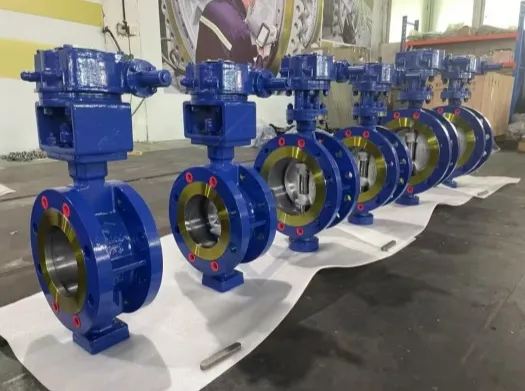
These advantages come straight from actual product specs – not marketing fluff.
One quick 90° motion is all it takes. No handwheel cranking, no heavy gearbox for smaller sizes. That makes these valves a great fit for manual operation in tight spots or for automated lines where cycle time is money.
When fully open, the disc barely gets in the way. Unlike a gate valve (which leaves a cavity) or a globe valve (which forces fluid to change direction), this streamlined design creates very little pressure drop. Your pump doesn’t have to work as hard. Your electric bill notices.
Because the body is thin (the disc fits inside a short housing), these valves weigh a fraction of what gate or globe valves weigh at the same diameter. A butterfly valve for a 24‑inch line can be lifted by one person; a gate valve would need a crane. That means simpler installation, cheaper supports, and easier maintenance.
When the disc closes, it sweeps across the seat, pushing solids out of the way. No pockets where slurry can settle and harden. For mining, wastewater, or paper pulp, these valves beat ball or gate valves that tend to trap particles.
Many valve types rely on line pressure to push the seat against the closure member. At low pressure, they leak. This design uses an elastomeric seat that seals tight regardless of upstream pressure. That’s why you see them so often in water distribution and vacuum systems.
Here’s a quick checklist based on actual product data.
| Characteristic | Why It Matters |
|---|---|
| Simple structure (disc, body, spindle) | Fewer parts to break, easier to repair |
| Lightweight | Lower installation cost, less structural support |
| Handles large diameters | Much cheaper than gate valves at 12″ and up |
| 90° operation | Fast cycling, perfect for automated lines |
| Low flow resistance | Energy savings, lower pumping cost |
| Works with suspended solids, powders, dust | No clogging, self‑cleaning action |
| Streamlined design, corrosion/abrasion resistance | Long life in harsh environments |
| Reliable sealing | Tight shut‑off even at low differential pressure |
Mining, mineral processing, and dredging move abrasive mixtures of solids and liquids. A butterfly valve with a resilient seat and an abrasion‑resistant disc (rubber‑lined or ceramic‑coated) can run thousands of cycles without leaking or jamming.
Pneumatic conveying systems for cement, flour, plastic pellets, or fly ash need valves that open and close fast without letting dust escape. Disc valves with bubble‑tight seals are the go‑to choice.
For water treatment, irrigation, or cooling water lines 12 inches and above, these valves cost a fraction of gate valves and take up way less space. A flanged version bolts directly between pipe flanges – no extra supports needed.
Unlike many quarter‑turn valves that should never be used for throttling, this type can handle flow regulation – as long as you check the service conditions. The disc can stop at any angle, giving a roughly linear flow characteristic. For non‑critical control, it saves you from buying a separate control valve.
Match the valve to your media. Common options:
Body – Cast iron, ductile iron, carbon steel, stainless steel, or aluminum
Disc – Same as body, or coated with nylon, PTFE, ceramic, or rubber lining
Seat – EPDM, NBR, Viton, PTFE, or metal for high temperatures
Stem – Stainless steel (416, 316), often with anti‑blowout design
For the product in the image, a Carbon Steel Flanged Butterfly Valve works well for moderate pressures and temperatures in water, oil, or gas services. Carbon steel gives you strength at a lower cost than stainless, and flanged ends make for easy bolting between pipe flanges.
All the features you’ve just read come from actual product specs – not brochure talk. TSV makes a full line of these disc valves alongside their ball valves. You can get them in wafer, lug, or flange designs, with manual levers, gear operators, or pneumatic/electric actuators.
TSV holds ISO 9001:2008, API, and CE certifications. Their in‑house testing covers pressure, seat leakage, and material verification. For abrasive or corrosive services, they offer lined valves with EPDM, PTFE, or ceramic coatings.
Sizes from 2″ up to 48″ and larger
Pressure ratings to Class 150/300 (PN10 to PN40)
Temperature range from -40°C to 200°C (depends on seat material)
Actuation: lever, gear, pneumatic (double‑acting or spring‑return), electric
Custom coatings and special alloys available on request
For a butterfly valve that gives you low cost, reliable sealing, and long cycle life, TSV has a proven solution.
Alignment – Make sure pipe flanges are aligned before tightening bolts. Misalignment can distort the body and cause leaks.
Gaskets – For flanged versions, use full‑face or flat ring gaskets as the valve design specifies.
Actuator mounting – If you add an actuator, support the valve body so you don’t bend the stem.
Inspection – Check the seat for wear periodically. Replace it if leakage goes above allowable limits.
Lubrication – Some gear operators need periodic greasing; manual levers may need stem lubricant.
Take care of it, and this valve can outlast the pipeline itself.
Whether you need a simple wafer valve for water service or a lined, corrosion‑resistant model for chemical slurry, TSV can help. Their engineering team can walk you through body materials, seat compounds, and actuation types.
Request a quote, a CAD model, or a sample for testing.
Related News


E-mail: info@tsv-valve.com

Telephone: +86-13695850057

Whatsapp: +86-13695850057

Address: TianSheng Industrial Park,Dong'ou Industrial Zone,Oubei Town,Wenzhou City,Zhejiang Province,China