- Email:info@tsv-valve.com


 Apr 25,2026
Every check valve has a cracking pressure – the minimum upstream pressure required to open the valve. Below that pressure, the valve stays closed. Above it, it opens. That sounds simple, but the consequences of getting it wrong are costly.
Cracking pressure too high: Your fluid won’t flow at low loads. The valve stays shut, starving your process.
Cracking pressure too low: The valve may chatter – rapidly opening and closing at low flow rates. Chatter wears out seats and discs, leading to premature failure.
How cracking pressure is determined: In a swing check valve, the disc’s weight and the hinge friction set the cracking pressure. In a lift check valve, a spring provides the closing force. The spring rate is selected based on the application’s expected pressure range.
A check valve with the wrong cracking pressure will either starve your process or destroy itself. Ask your supplier for the cracking pressure spec before you order.
Not all check valves are the same. The internal mechanism determines how they behave, where they can be installed, and how much pressure drop they create.
| Feature | Swing check valve | Lift check valve (piston/ball) |
|---|---|---|
| Disc movement | Rotates on a hinge pin | Moves vertically (linear) |
| Cracking pressure | Low (gravity + hinge friction) | Higher (spring force) |
| Pressure drop | Very low | Moderate to high |
| Suitable orientation | Horizontal (some vertical up) | Vertical or horizontal (spring-assisted) |
| Best for | Water, wastewater, large pipes | Steam, high-pressure gas, boiler feedwater |
| Typical pressure class | Class 150‑600 | Class 150‑2500 |
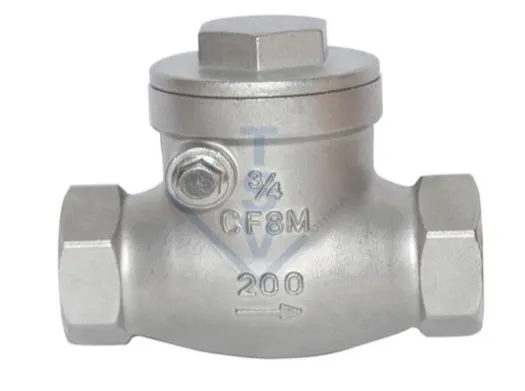
The disc swings open like a door. When flow stops, gravity and backpressure close it. Because the disc moves out of the flow path, pressure drop is minimal. But the slow closure can cause water hammer in long pipelines.
Best for: Water distribution, irrigation, HVAC, and any application where low pressure drop is critical.
The disc or piston lifts vertically off the seat. A spring (or gravity) returns it when flow reverses. The spring provides a faster closure, reducing water hammer. However, the flow path is more restrictive, so pressure drop is higher.
Best for: Steam lines, high-pressure gas, boiler feedwater, and applications where water hammer must be controlled.
A check valve that matches your flow rate, pressure, and orientation requirements will last for years. One that doesn’t will fail within months.
The end connection affects installation time, leak potential, and maintenance access.
| Connection type | Best for | Pros | Cons |
|---|---|---|---|
| Threaded (NPT, BSP) | Small pipes (≤2″), low pressure | Low cost, easy installation | Prone to leakage if not sealed properly |
| Flanged | Medium to large pipes, easy removal | Strong seal, easy to remove for maintenance | Higher cost, heavy, requires gaskets |
| Butt weld | High pressure, high temperature, permanent | No leak paths, very strong | Permanent – cannot remove without cutting |
| Wafer (clamped between flanges) | Space‑constrained, lightweight | Short face-to-face, light, low cost | Requires line flanges, alignment critical |
A check valve with the wrong connection can cost more in installation labor than the valve itself. Choose based on your existing pipe ends and maintenance plans.
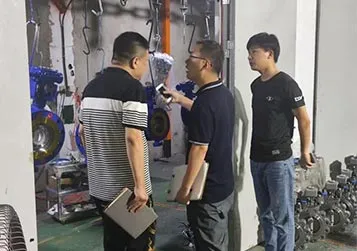
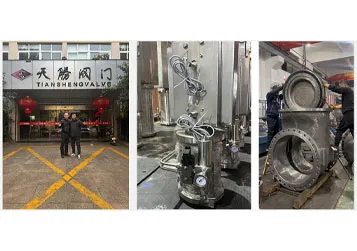
Theory is good. Hardware is better. TSV’s production facility includes:
| Equipment | Quantity | Role in check valve manufacturing |
|---|---|---|
| Ordinary lathe | 5 | Basic turning of bodies and covers |
| Gantry milling machines | 5 | Large, complex valve body machining |
| CNC machining centers | 10 | High‑precision boring, drilling, and contouring of seats and bores |
| Drilling machines | 4 | Producing bolt holes, flange holes, and threads |
| Drilling and milling machines | 4 | Integrated drilling and milling for complex features |
| CNC lathes | 10 | High‑precision turning of discs, stems, and internal bores |
What this means for you: CNC equipment holds tolerances within microns. That means a disc seats perfectly against the body bore every time. No misalignment, no leakage. The gantry mills handle large‑diameter check valve bodies (up to 24″ and larger). The drilling machines ensure flange bolt holes align perfectly with your pipeline flanges – no wrestling with misaligned holes during installation.
A check valve (fifth mention) produced on modern CNC equipment will seal tighter, last longer, and install easier than one made on old manual machines. ← 主词第5次
TSV doesn’t just machine parts; they follow a rigorous quality control process.
Widely varied products: From a full range of standard and custom valves, TSV delivers performance and reliability for specific industry demands.
One-stop service: From custom valves tailored to your exact specifications to seamless bulk order fulfillment with rigorous quality control.
Strict quality control: Each valve undergoes multiple inspection stages by a dedicated quality control team.
Trustworthy corporate culture: Customer focus, open communication, reliable performance, and customized global solutions.
TSV also holds ISO 9001, CE, and API 6D certifications, and can provide NACE MR0175 compliance for sour service. Their valves are tested to API 598 standards – 100% hydrostatic shell testing and seat leakage testing.
Even the best valve fails if installed incorrectly.
A swing check valve must be installed horizontally (disc hinged at the top) or, in some designs, vertically with flow upward. Install it vertically with flow downward, and the disc will fall closed immediately.
Turbulence from an elbow placed too close to the valve can keep the disc from seating. Allow at least 5‑10 pipe diameters of straight pipe upstream.
Welding slag, sand, or rust can lodge between the disc and seat. Always flush the line before valve installation.
For wafer‑type check valves, uneven bolt torque warps the body and binds the disc. Use a torque wrench and follow the pattern.
| If your application is… | Choose… |
|---|---|
| Water, low pressure drop, large pipe size | Swing check, flanged or wafer |
| Steam, high pressure, fast closure needed | Lift check (spring‑assisted) |
| Limited space, weight‑sensitive | Wafer check (dual plate) |
| Abrasive slurry | Heavy‑duty swing check with hardened seat |
| Gas pipeline, low flow resistance | Dual plate check (API 594) |
Don’t guess. Provide your line size, fluid, pressure, temperature, and connection type. TSV can recommend the right swing or lift check valve, with the right cracking pressure and seat material, and provide test documentation.
Related News



E-mail: info@tsv-valve.com

Telephone: +86-13695850057

Whatsapp: +86-13695850057

Address: TianSheng Industrial Park,Dong'ou Industrial Zone,Oubei Town,Wenzhou City,Zhejiang Province,China