- Email:info@tsv-valve.com


 Apr 07,2026
Turn a handle 90°, and flow starts or stops. That’s the simple promise of a quarter‑turn valve. But when your media carries abrasive particles or static electricity builds with every cycle, simple isn’t enough. For chemical plants, oil and gas facilities, or slurry applications, you need a device that resists static discharge, handles suspended solids, and withstands corrosion. This guide explains the key engineering features that separate industrial‑grade rotary valves from basic ones – and shows how one manufacturer builds all of them into their products.
A quarter-turn shut-off device opens or closes with a 90° stem rotation. You can operate it manually or with a pneumatic, electric, or hydraulic actuator, depending on pressure and bore size. It’s a switching device, not a control valve – you never leave it partially open during normal operation. That’s the standard design. But when conditions turn harsh – flammable gases, abrasive slurries, corrosive chemicals – standard components fail fast. That’s when a ball valve built for rugged service proves its worth.
Industrial‑grade units must handle five critical demands. Here’s what separates them from basic commodity valves.
Every time the ball rotates, friction creates static electricity. In petrochemical, gas, or solvent handling lines, that static is a real ignition risk. A proper shut‑off valve must have a way to dissipate that charge safely. No spark, no worry. A well‑designed ball valves include an anti‑static device that grounds the ball to the stem and body.
When the line is pressurized, cheap valves become hard to turn. A thrust bearing reduces friction torque, so you can operate the valve by hand even under pressure. For actuated systems, lower torque means less wear on gears and motors – and smaller, more affordable actuators.
Many quarter‑turn valves struggle when the media carries solid particles. Particles get trapped, scratch the ball, or block the seat. A well‑designed unit keeps working without frequent jamming. The construction – ball, stem, cover, two‑body design – matters. Features like self‑cleaning seats and wide flow passages help.
Not just the body – the ball, stem, and seats must resist corrosion too. The right material selection (stainless steel, Hastelloy, Inconel, or special coatings) based on your media means fewer unexpected replacements and longer service life.
Even in reduced bore designs, a good valve creates minimal flow restriction. Your pump works less hard. Energy costs drop. Full‑bore designs offer even lower pressure drop, but reduced bore is often acceptable for many applications.
Static electricity is invisible but deadly. In hydrocarbon service, a single spark can ignite vapors. A proper ball valve incorporates a static grounding path. Typically, a spring or metal contact connects the ball to the stem, and the stem to the body, and the body to the pipeline. This ensures that any static charge dissipates safely to ground.
Oil and gas pipelines
Petrochemical plants
Solvent handling systems
Any application with flammable gases or low‑flash‑point liquids
Without anti‑static design, you are relying on luck. International standards like API 608 and ISO 17292 often require anti‑static features for certain service classes.
Slurries, mining tailings, paper pulp, and even some food products contain solid particles. These particles can lodge between the ball and seat, causing scoring, leakage, or seizure.
Soft seats (PTFE, Devlon, etc.) can embed particles but wear faster. Metal seats resist abrasion but may leak more. Some manufacturers offer “self‑relieving” seats that allow particles to escape. A ball valve for slurry service should have:
Hardened ball and seat surfaces (e.g., chrome carbide, tungsten carbide coating)
Wide seat contact area to distribute stress
Options for purge ports to flush out accumulated solids
Top‑entry or split‑body designs allow easier maintenance without removing the valve from the line – critical for slurry applications where frequent inspection is needed.
When a valve is under pressure, the line force pushes the ball against the downstream seat. That increases breakaway torque. A thrust bearing – typically a low‑friction material like PTFE or bronze – sits between the stem and body, reducing rotational resistance.
Lower torque means you can use a smaller, less expensive actuator (pneumatic or electric). It also reduces power consumption and extends the life of gears and linkages.
Not all stainless steel is the same. For mildly corrosive media (water, some chemicals), CF8M (316 stainless) may suffice. For aggressive acids or chlorides, you may need Alloy 20, Hastelloy C276, or titanium.
| Material | Typical Application |
|---|---|
| CF8M (316 SS) | General chemical, water, oil |
| CF3M (316L SS) | Low‑carbon, welding required |
| Alloy 20 | Sulfuric acid, nitric acid |
| Hastelloy C276 | Chlorides, seawater, strong oxidizers |
| Monel | Hydrofluoric acid, seawater |
The same applies to seats: PTFE for general use, PEEK for high temperature, Devlon for low wear.
All the engineering details we’ve discussed – anti‑static, low torque, solids handling, corrosion resistance – don’t exist in a spec sheet alone. They have to be built into a real product.
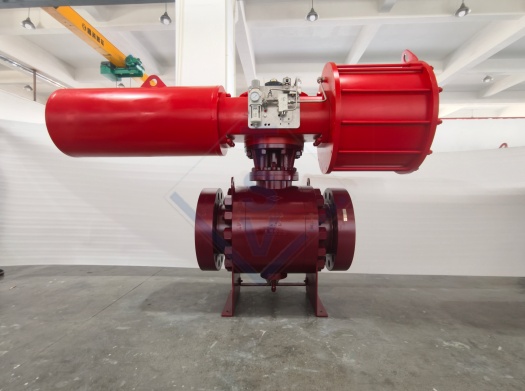
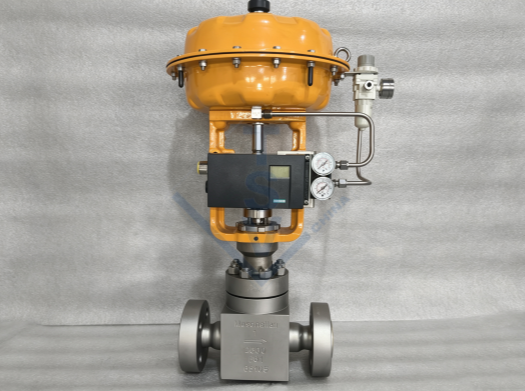
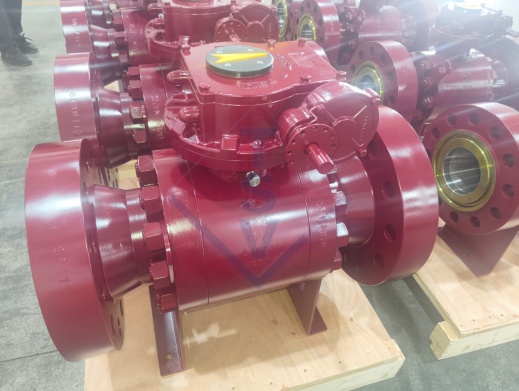
TSV does exactly that. Their high‑performance rotary isolation valves come in floating, trunnion, 3‑way, metal‑to‑metal seat, and reduced bore configurations. They hold API and CE certifications, and their API6D product line includes ball valves with all the features mentioned above. Every critical test – chemical analysis, mechanical, NDT, PMI, cryogenic, high‑temp, fugitive emission – is performed in‑house.
| Feature / Capability | Detail |
|---|---|
| Anti-static function | Dissipates static charge safely during switching |
| Thrust bearing | Low torque operation even under line pressure |
| Suspended solids handling | Designed for media with solid particles – resists jamming |
| Corrosion resistance | Body, ball, stem, seats – materials matched to your media |
| Low fluid resistance | Minimal pressure drop, full bore and reduced bore |
| Tailor-made capability | Pressure rating, temperature, end connections, materials, actuation type |
| In-house testing | Chemical analysis, mechanical, NDT (UT/MT/PT/RT), PMI, high‑pressure air, cryogenic, high‑temp, fugitive emission |
| Certifications | API, CE, ISO 9001:2008 |
| Support | Actuating (pneumatic/electric/hydraulic), installation, maintenance, test reports on request |
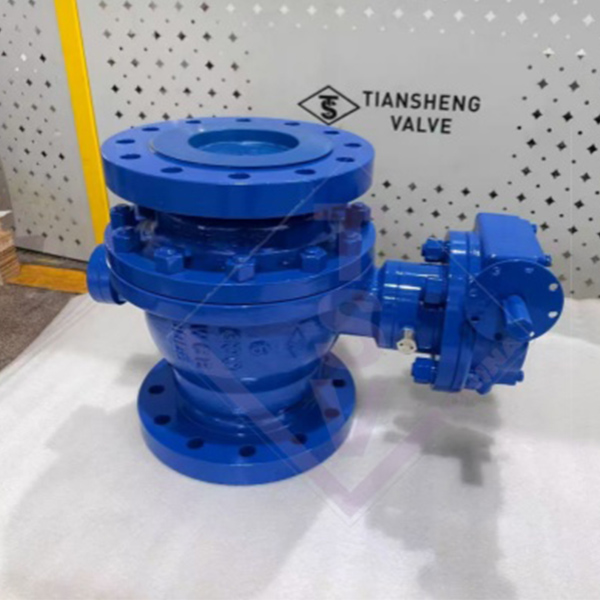
TSV doesn’t rely on external labs for every batch. Their own facilities perform non‑destructive testing (ultrasonic, magnetic particle, dye penetrant, radiographic), positive material identification (PMI), and special performance tests (cryogenic, high‑temperature, fugitive emission). That means faster turnaround and guaranteed consistency.
Two common ball valve designs:
Floating ball – The ball floats between two seats. Line pressure pushes the ball against the downstream seat, creating a seal. Suitable for smaller sizes (up to 8 inches) and lower pressures.
Trunnion – The ball is anchored by trunnions (bearings). Pressure does not push the ball into the seat; instead, the upstream seat is spring‑loaded. Suitable for large sizes, high pressures, and high cycle applications.
TSV offers both. For slurry or high‑torque applications, trunnion is often preferred because it reduces operating torque.
Choosing a ball valve for harsh conditions means ensuring static safety, low torque, and solid‑handling ability.
Anti‑static – critical for flammable environments
Thrust bearing – smooth operation under pressure
Handles suspended solids – fewer jams, longer life
In‑house NDT, PMI, cryogenic, fugitive emission testing
API, CE, ISO 9001 certifications
Custom and actuation services available
Deciding between floating vs. trunnion? Worried about static or solids? Contact TSV to discuss your pressure, temperature, media (especially with particles), and any special testing requirements.
Related News


E-mail: info@tsv-valve.com

Telephone: +86-13695850057

Whatsapp: +86-13695850057

Address: TianSheng Industrial Park,Dong'ou Industrial Zone,Oubei Town,Wenzhou City,Zhejiang Province,China