- Email:info@tsv-valve.com


 Jul 02,2026
You‘re standing at the thickener feed line. The slurry is coming from the cyclone—thick, abrasive, and loaded with solids. A standard gate valve on this line would be a maintenance nightmare. The wedge would clog. The bottom pocket would fill with settled solids. Within weeks, you’d be replacing it.
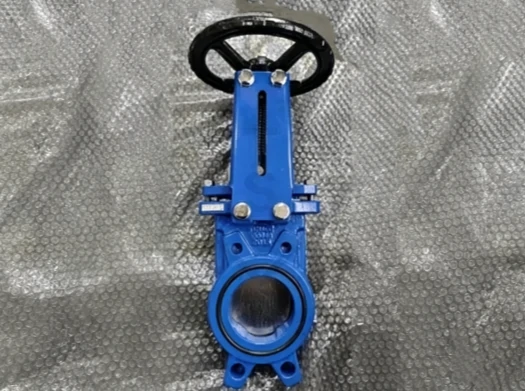
A Knife Gate Valve is built for exactly this service. Its sharp-edged gate cuts through thick and fibrous materials, making it ideal for applications where traditional valves clog or fail. Mining operations around the world rely on these valves for slurry isolation—from the cyclone to the thickener, from the tailings line to the process water circuit.
This guide covers why standard gate valves fail in slurry service, the design features that make knife gate valves effective, the key selection parameters you need to consider, and installation best practices that maximize service life. By the end, you‘ll understand why the knife gate valve is the workhorse of mining slurry handling.
Standard gate valves are designed for clean fluids. Put them in slurry service, and they fail in predictable ways.
The wedge in a standard gate valve wedges into position between the seats. When solids are present, they get trapped in the seat grooves, preventing the wedge from seating fully. The result: incomplete shut-off and accelerated wear.
Standard gate valves have a bottom pocket below the wedge. In slurry service, this pocket becomes a settling tank. Solids accumulate, harden, and prevent the wedge from closing completely. Over time, the settled solids can even push the wedge off its guides.
Multi-turn operation takes time—too much time when you need to isolate a line quickly. Slow operation also means the gate spends more time in contact with abrasive slurry during opening and closing, accelerating wear. A knife gate valve operates with a quarter-turn or linear stroke, closing quickly and reducing wear on the sealing surfaces.
Knife gate valves are engineered specifically for abrasive and viscous media. Here’s what makes them different.
The defining feature of a knife gate valve is its sharp-edged gate. As the valve closes, the gate shears through the media like a knife. This shearing action cuts through fibers, solids, and viscous materials that would clog a standard gate valve. The gate is typically V-shaped or has a sharp leading edge that concentrates force and cleanly separates the media.
Knife gate valves can be configured for unidirectional or bidirectional sealing. In unidirectional configuration, the valve seals against pressure from one direction—typically the upstream side. In bidirectional configuration, the valve seals against pressure from either direction. For mining slurry applications, bidirectional sealing is often preferred because it provides flexibility in piping layout and allows the valve to be installed without concern for flow direction.
Many slurry-duty knife gate valves include flush ports that allow the user to clean the valve body【7†L34】. Flush ports are openings in the valve body where cleaning fluid can be injected to wash away accumulated solids. This is particularly valuable in applications where solids tend to settle and harden in the valve body. A quick flush during maintenance can extend the valve’s service life significantly.
Choosing the right knife gate valve for your application requires attention to several key parameters.
The seat material determines the valve’s wear resistance and chemical compatibility. UHMWPE (ultra-high molecular weight polyethylene) offers excellent abrasion resistance and a low coefficient of friction, making it ideal for highly abrasive slurries. Natural rubber provides good abrasion resistance and excellent resilience, but its chemical compatibility is more limited. For mining slurries with significant solids content, UHMWPE is often the preferred choice.
Knife gate valves come in two body styles: lug and wafer. A lug-style valve has threaded inserts in the body, allowing it to be installed at the end of a pipeline and removed without disturbing the downstream piping. A wafer-style valve is designed for installation between two flanges and requires both upstream and downstream piping to be in place. For most mining applications, the wafer style is more common and cost-effective.
Manual actuation uses a handwheel or lever to operate the valve. It’s suitable for infrequent operation—maintenance points where the valve is opened or closed only during scheduled service. Pneumatic actuation uses a cylinder to operate the valve, enabling remote control and frequent operation. For automated mining processes, pneumatic actuation is standard.
Proper installation can double or triple the service life of a knife gate valve in slurry service.
For heavy-particle media, horizontal installation with the valve stem vertical is recommended. This orientation allows solids that settle in the valve body to fall away from the seating surfaces rather than accumulating on them. If the valve must be installed vertically, consider adding flush ports to clean accumulated solids.
Avoid imposing piping stress on the valve. Misaligned piping creates bending loads that distort the valve body, affecting gate movement and seat sealing. Use pipe supports to ensure that the piping aligns with the valve flanges without forcing the valve into position.
Use the correct flange gaskets and bolt torque for the service conditions. Over-torquing can distort the valve body; under-torquing can cause leaks. Follow the manufacturer’s recommendations for bolt torque and gasket selection. TSV valves are designed to meet global standards including ISO, API, ASME, ANSI, and BS, so you can be confident in the specified installation requirements.
| Selection Parameter | Options | Mining Slurry Recommendation |
|---|---|---|
| Seat Material | UHMWPE / Natural Rubber | UHMWPE for highly abrasive slurries |
| Body Style | Lug / Wafer | Wafer for most applications |
| Actuation | Manual / Pneumatic | Pneumatic for automated processes |
| Sealing | Unidirectional / Bidirectional | Bidirectional for installation flexibility |
| Flush Ports | With / Without | With for settling-prone solids |
Can a knife gate valve be used for pumping control?
No. Knife gate valves are designed for fully open or fully closed service. They should not be used for throttling or flow control. Using a knife gate valve in a partially open position exposes the gate and seat to high-velocity abrasive flow, causing rapid wear. For flow control, use a valve specifically designed for throttling service.
What is the maximum solid content for a knife gate valve?
Knife gate valves can typically handle slurries with 40-60% solids content by weight. The exact maximum depends on the particle size, shape, and hardness, as well as the seat material. UHMWPE seats handle higher solids content better than rubber seats. For applications with extremely high solids content or large particles, consult the manufacturer for specific recommendations.
How to handle settle-on-bottom solids?
For slurries with solids that tend to settle and harden in the valve body, a bottom flush port is recommended. The flush port allows you to inject water or air to break up settled solids before operating the valve. Some valves also feature a wiper or scraper seat that cleans the gate as it moves, preventing solids from accumulating on the sealing surfaces.
When you‘re selecting a knife gate valve for mining slurry, the manufacturer’s capabilities matter as much as the valve design.
TSV Valve produces a range of knife gate valves with particular emphasis on raw materials and design to adapt to customer requirements. Most products can be tailor-made to reach specific constraints. With over 100 series and 2,000 specifications available, TSV offers the variety needed for diverse mining applications.
The company‘s manufacturing capabilities include 10 CNC machining centers for high-precision, high-efficiency processing of complex parts, along with 10 CNC lathes for producing rotatable parts with high automation. This manufacturing depth ensures that each valve meets the tight tolerances required for reliable slurry service.
TSV provides a 12-month product warranty and lifelong free consulting services. For mining operations where valve reliability is critical, this support matters. The company also offers additional services including actuating, installation, and maintenance, making it a one-stop supplier for knife gate valve needs.
For your next slurry isolation application, start with the basics: choose a knife gate valve with the right seat material for your abrasive conditions, select the appropriate body style and actuation, and install it with proper orientation and piping alignment. With the right valve and proper installation, you can expect years of reliable service—even in the toughest mining slurry applications.
Ready to specify knife gate valves for your mining operation? Reach out to TSV Valve's team—they can provide technical data, material recommendations, and sample testing to help you select the right valve for your slurry application.
Related News



E-mail: info@tsv-valve.com

Telephone: +86-13695850057

Whatsapp: +86-13695850057

Address: TianSheng Industrial Park,Dong'ou Industrial Zone,Oubei Town,Wenzhou City,Zhejiang Province,China