- Email:info@tsv-valve.com


 Jul 23,2026
China is a major global manufacturing base for industrial valves, producing everything from basic gate valves to high-performance control valves for demanding applications. The reality is straightforward: the market contains both world-class manufacturers and suppliers that cut corners. The difference between a successful sourcing relationship and a costly failure often comes down to the diligence applied before the purchase order is issued.
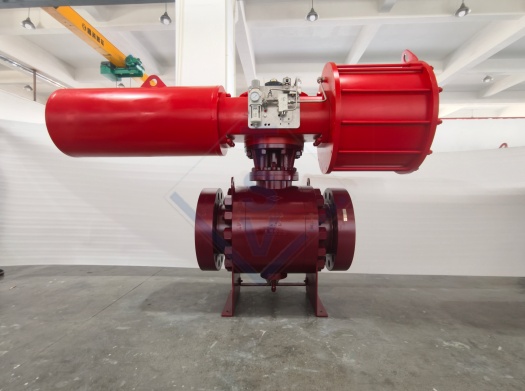
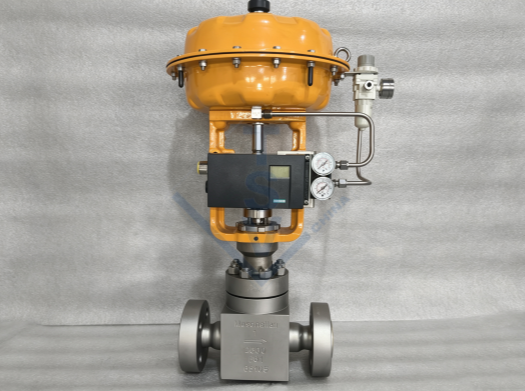
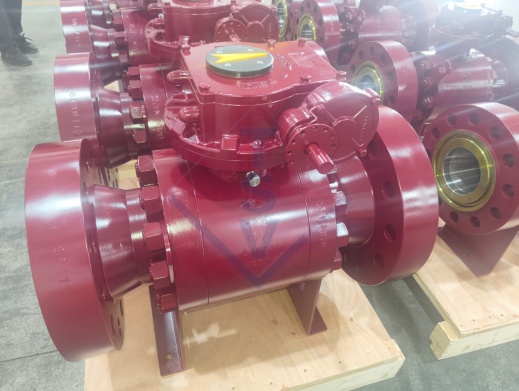
An Industrial Valves sourcing strategy must go beyond price comparison. This guide outlines five critical considerations—certifications and their scope, total cost of ownership, quality control systems, communication and documentation plans, and manufacturing lead times—to help procurement professionals and supply chain managers evaluate Chinese valve suppliers with confidence. TSV Valve's product range extends from medium to high performance, with particular emphasis on raw materials and design to adapt to customer requirements.
Certifications are the first filter in supplier evaluation, but not all certifications carry the same weight.
Many suppliers claim to have API certification. The critical step is to verify the specific API monogram license—such as API 6D for pipeline valves—and its scope. The API website allows you to verify active licenses and confirm that the certification covers the specific valve types you are procuring. A general API certification without the specific monogram is not sufficient.
For valves destined for the European market, CE certification under the Pressure Equipment Directive (PED 2014/68/EU) is required. The key distinction is the certification module. Module H represents full quality assurance, covering design, manufacturing, and final inspection. It carries the highest level of conformity. Module A or other lower-tier modules indicate a less rigorous quality system.
ISO 9001:2015 certification is the baseline for a functioning quality management system. However, it should not be the sole criterion. A supplier can have ISO 9001 and still have significant gaps in specific valve manufacturing capabilities. Use it as a starting point, not a finish line.
The lowest purchase price rarely translates to the lowest total cost.
A low-cost valve often uses lower-grade materials, simpler designs, and shorter-life seals. The replacement cost of a single seal in a critical valve can exceed the price difference between a cheap valve and a quality one. Over a 10-15 year service life, maintenance costs can be several times the initial purchase price.
The most significant cost is often unplanned downtime. A valve failure that shuts down a production line for even a few hours can cost more than the valve itself. For critical applications, the reliability of the valve directly impacts operational continuity. TSV offers additional services including actuating, installation, and maintenance to help mitigate these risks.
Evaluate the supplier’s track record with similar applications. A supplier that has successfully delivered valves for comparable operating conditions is more likely to provide reliable performance than one that is cheaper but less experienced.
A supplier's quality control system is the foundation of product reliability. A brochure is not a substitute for a demonstrated system.
Ask to review the supplier's Quality Management System manual. Look for documented procedures covering design control, purchasing, production, inspection, and non-conformance handling. A comprehensive manual that covers all stages of the value chain indicates a mature quality culture.
Non-destructive testing (NDT) is essential for verifying material integrity. Ask for certifications of the NDT personnel who will be performing tests on your valves. Certified personnel (e.g., ASNT Level II or III) provide confidence that the testing is performed correctly and that results are reliable.
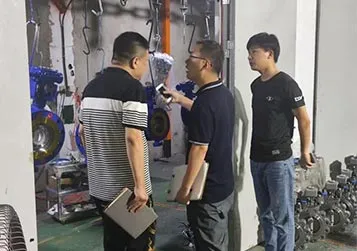
Suppliers with in-house testing facilities—including hydrostatic testing, pneumatic testing, and material verification—can provide faster turnaround and more consistent quality control than those that outsource these functions.
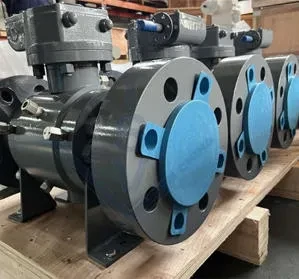
Clear communication and comprehensive documentation prevent misunderstandings and provide traceability.
The Inspection and Test Plan (ITP) should be defined and agreed upon before production begins. The ITP should specify the hold points, witness points, and review points for inspection and testing. Clear definitions of who witnesses which tests and what documentation is required at each stage prevent disputes later.
The final deliverable should include a complete data book with Material Test Reports (MTRs), Positive Material Identification (PMI) results, NDT reports, pressure test records, and dimensional inspection reports. All documentation must be traceable to the specific order number and valve serial number.
Technical specifications should be clear and unambiguous. Confirm that the supplier has engineering staff capable of understanding and executing the technical requirements of your project. TSV's products can be tailor-made to reach specific constraints, and their design emphasis on raw materials suggests a focus on engineering capability.
A supplier's stated lead time is only as reliable as their manufacturing capacity and supply chain.
For common materials like WCB (carbon steel) and CF8M (stainless steel), ask about the supplier’s raw material stock. Suppliers with material on hand can start production faster and are less vulnerable to supply chain disruptions.
Identify the bottleneck processes in the supplier’s workflow. NDT, machining of large parts, and specialized welding are common bottlenecks. Understanding where delays are most likely to occur helps in setting realistic expectations and managing the project timeline.
Ask about the supplier’s current order book and production capacity. A supplier running at full capacity may not be able to meet your timeline, regardless of their stated lead time.
Is it safe to pay a 30% deposit to a Chinese valve manufacturer?
A 30% deposit is a standard industry practice for custom-manufactured valves. However, it should only be extended to suppliers with a verifiable track record and, where possible, a physical factory audit. Checking the supplier’s business license, export history, and references from previous clients reduces risk.
How to handle warranty claims with a manufacturer overseas?
Warranty terms should be clearly defined in the purchase contract. The most effective approach is to specify that any warranty claim must be supported by a third-party inspection report from an accredited testing body. This removes ambiguity and provides an objective basis for claim resolution.
Can I get valves with NACE MR0175 from China?
Yes, many Chinese manufacturers can supply valves with materials conforming to NACE MR0175 for sour service applications. The critical requirement is to demand material certificates and PMI verification for each valve. The certification scope should explicitly include NACE compliance. TSV, as a manufacturer serving companies like SINOPEC and OXY, has demonstrated capability in meeting such demanding specifications.
Sourcing industrial valves from China requires a systematic approach to risk management. By focusing on certifications, total cost of ownership, quality systems, communication, and lead times, procurement professionals can identify suppliers that deliver consistent quality and reliable performance.
TSV Valve offers a product range from medium to high performance, with particular emphasis on raw materials and design to adapt to customer requirements. Most products can be tailor-made to reach specific constraints, and additional services including actuating, installation, and maintenance are available. TSV has served major industry players including SINOPEC and OXY, demonstrating capability in meeting demanding specifications.
Download TSV's Supplier Capability Questionnaire — or contact their sales team directly to request a supplier audit checklist and discuss your specific valve requirements.
Related News


E-mail: info@tsv-valve.com

Telephone: +86-13695850057

Whatsapp: +86-13695850057

Address: TianSheng Industrial Park,Dong'ou Industrial Zone,Oubei Town,Wenzhou City,Zhejiang Province,China