- Email:info@tsv-valve.com


 Aug 06,2026
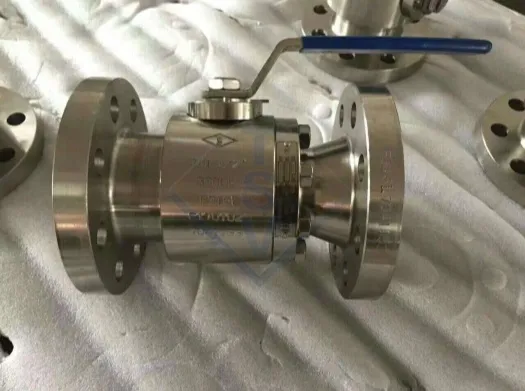
You're specifying valves for a pipeline, a processing plant, or a critical flow control application. The requirement is straightforward: reliable shut-off, minimal leakage, and long service life. A floating ball valve achieves this through a simple but effective mechanism: the ball is compressed by two elastomeric seats that keep it floating, improving the valve's leak tightness. As upstream pressure increases, the ball is pushed more firmly against the downstream seat, creating a seal that actually gets tighter as the pressure rises. The forged steel floating ball valve is one example—a robust design engineered for demanding industrial environments, certified to API-6D and CE specifications. This guide covers what makes a floating ball valve different, the key design features that ensure reliability, and what to look for when selecting one for your application.
The "floating" in a floating ball valve refers to the ball's ability to move slightly within the valve body. The ball is held in place by two elastomeric seats—one upstream, one downstream. When the valve is in the closed position, the ball is pushed downstream by the line pressure. This movement forces the ball against the downstream seat, compressing it and creating a tight seal. The higher the pressure, the tighter the seal becomes. This self-energizing mechanism is what makes floating ball valves particularly effective for shut-off applications where zero leakage is critical.
Unlike fixed ball designs, the floating ball's movement under pressure actually improves sealing performance. The downstream seat absorbs the load, distributing the sealing force evenly across the ball surface. This results in a reliable, bubble-tight shut-off that meets the most demanding industry standards.
Floating ball valves are typically preferred for lower pressure applications (up to Class 600) and smaller pipe sizes. The floating design provides excellent shut-off at a lower cost than trunnion-mounted designs, making it the go-to choice for general industrial and process applications.
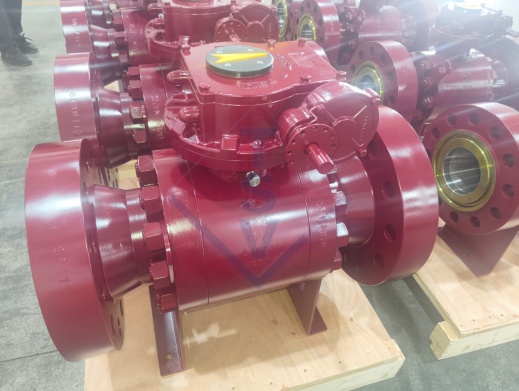
Ball valves can be manufactured through either forged or cast methods. The choice between forging and casting depends on operational parameters, functional expectations, and budgetary constraints. For critical applications where strength and reliability are paramount, forged steel offers distinct advantages.
Forged steel is stronger and more impact-resistant than cast steel. The forging process aligns the metal's grain structure, eliminating voids and porosity that can weaken cast components. This results in a valve body that can withstand higher pressures, more severe temperature cycling, and greater mechanical stress without failure.
Primary components are available in carbon steel, 316 stainless steel, and other high-performance metals. Critical wear components are available in hardened metals, advanced elastomers, and graphite-based materials. Backed by years of material science expertise, the optimal combination is selected to meet both performance requirements and budget considerations while maintaining the highest safety standards.
Floating ball valves incorporate several safety features that protect both personnel and equipment. The anti-blowout stem design ensures safety and smoother valve operation once installed. The stem is retained within the valve body, preventing it from being blown out by line pressure even if the stem packing fails.
The stem retention feature is critical in high-pressure applications. If the stem were to be ejected under pressure, it could cause catastrophic failure and serious injury. The anti-blowout design keeps the stem securely in place, even under extreme conditions.
To prevent misuse or accidents and extend valve lifespan, a valve lock is added along with a fireproof seal. The fire-safe design ensures that the valve maintains its sealing integrity even during a fire, preventing the escalation of hazardous situations. The valve lock prevents unauthorized operation, reducing the risk of accidental opening or closing.
The material selection for a floating ball valve determines its corrosion resistance, temperature capability, and service life. Multiple material configurations are available to match specific process requirements.
Carbon steel is the standard choice for general industrial applications where corrosion is not a primary concern. It offers good strength and cost-effectiveness for water, oil, and gas services.
316 stainless steel provides excellent corrosion resistance, particularly in environments with chlorides or acidic conditions. It's the preferred choice for chemical processing, marine, and pharmaceutical applications.
The valves are functional from cryogenic temperatures up to 800°C and exceed industry stability benchmarks by 80% under severe conditions. This wide temperature range makes them suitable for everything from LNG handling to high-temperature steam applications.
Floating ball valves are available with multiple connection types to suit different piping systems and installation requirements. The choice of connection type influences installation, maintenance, system performance, and overall costs.
Flanged connections are the most common for larger pipe sizes and higher pressure ratings. They provide a secure, reliable connection that can be easily disassembled for maintenance. Flanged valves are available in standard NPS and DN dimensions.
Threaded connections are suitable for smaller pipe sizes and lower pressure applications. They provide a compact, cost-effective installation. Welded connections offer a permanent, leak-free joint that eliminates the need for flanges and gaskets.
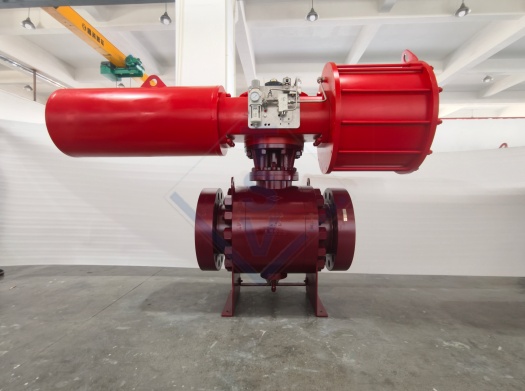
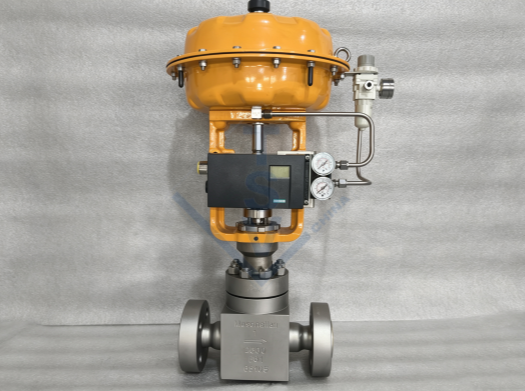
Comprehensive actuation solutions are available, including manual, electric actuators, pneumatic systems, hydraulic drives, and other variants. The ideal actuation selection requires careful evaluation of process requirements, automation level, operating environment characteristics, and economic factors.
| Specification | Typical Value | Why It Matters |
|---|---|---|
| Pressure rating | Class 150 – Class 600 | Determines maximum operating pressure |
| Temperature range | Cryogenic to 800°C | Suitability for process conditions |
| Body material | Carbon steel, 316 SS | Corrosion resistance and strength |
| Seat material | PTFE, PEEK, metal | Seal integrity and temperature capability |
| End connections | Flanged, threaded, welded | Installation method |
| Actuation | Manual, electric, pneumatic | Automation level |
| Certifications | API-6D, CE | Quality and compliance |
What is the difference between a floating ball valve and a trunnion-mounted ball valve?
In a floating ball valve, the ball is held by the seats and moves slightly under pressure to create a seal. In a trunnion-mounted ball valve, the ball is fixed in place by a trunnion, reducing seat wear. Floating ball valves are typically used for lower pressure and smaller sizes; trunnion-mounted valves are used for higher pressures and larger sizes.
What are the temperature limits of a floating ball valve?
Floating ball valves can be engineered for temperatures from cryogenic conditions up to 800°C. The temperature limit depends on the seat and seal materials—PTFE for standard temperatures, PEEK or metal for high-temperature applications.
What certifications should a floating ball valve have?
Look for API-6D certification for pipeline valves and CE certification for European markets. Additional certifications may be required depending on the industry—fire-safe testing, NACE for sour service, and SIL for safety applications.
How do I choose between forged and cast construction?
Forged valves offer higher strength and resistance to impact and pressure cycling, making them suitable for critical and high-pressure applications. Cast valves are more cost-effective for less demanding services. The choice depends on your operational parameters, functional expectations, and budget.
Selecting a floating ball valve comes down to three factors: pressure rating (match your system pressure), material selection (match your fluid and temperature), and connection type (match your piping). Contact TSV for a customized quote → —their team can help you select the right forged steel floating ball valve configuration for your specific application.
TSV is a leading floating ball valve factory specializing in producing valves in various sizes to meet specific application needs. The Forged Steel Floating Ball Valve features a floating ball design with two elastomeric seats for improved leak tightness, an anti-blowout stem design for safety, and a fireproof seal with valve lock to prevent misuse. Available in carbon steel, 316 stainless steel, and other high-performance metals, the valve is certified to API-6D and CE specificationsand functional from cryogenic temperatures to 800°C. TSV provides comprehensive technical support and fast replacement services, ensuring continuous operation and minimal downtime. Connect with TSV to discuss your pressure requirements, material specifications, and connection preferences.
Related News


E-mail: info@tsv-valve.com

Telephone: +86-13695850057

Whatsapp: +86-13695850057

Address: TianSheng Industrial Park,Dong'ou Industrial Zone,Oubei Town,Wenzhou City,Zhejiang Province,China